
Introduction: Why Restaurant Inventory Audits Matter in 2026
Running a successful restaurant is not only about serving great food; it is also about controlling costs, reducing wastage, and maintaining operational efficiency. One of the biggest challenges restaurant owners face is managing inventory accurately.
Food ingredients, beverages, packaging materials, and kitchen supplies represent a major portion of restaurant expenses. Without regular inventory audits, restaurants often experience problems like food wastage, stock shortages, over-ordering, theft, inaccurate costing, and reduced profit margins.
A restaurant inventory audit checklist helps restaurant owners, managers, and kitchen teams systematically review stock levels, track consumption, identify losses, and maintain better control over daily operations.
Modern restaurant management software like Zilicius Restaurant Management System help automate inventory tracking, monitor stock movement in real time, generate reports, and provide insights that help restaurants make smarter purchasing decisions.
In this guide, we will cover a complete restaurant inventory audit checklist, best practices, common mistakes, and how technology can simplify inventory management.
Why Inventory Management Is Critical for Restaurant Success
Restaurant inventory is directly connected to profitability. Every ingredient that is wasted, overstocked, or unaccounted for affects the restaurant's bottom line. An effective inventory management process helps restaurants reduce food costs, maintain optimal stock levels, improve purchasing decisions, and ensure consistent food quality.
Modern restaurant inventory management software enables restaurant owners to monitor stock movement in real time, automate inventory updates, and make data-driven business decisions.
What Is a Restaurant Inventory Audit?
A restaurant inventory audit is a systematic process of checking, counting, and analyzing all available stock items used in restaurant operations.
It includes:
Food ingredients
Raw materials
Beverages
Frozen products
Packaging supplies
Cleaning materials
Kitchen equipment supplies
Consumables
The purpose of an inventory audit is to compare:
Actual Physical Stock + Recorded Inventory Data + Sales Consumption
This helps restaurants identify:
Inventory shortages
Excess stock
Food wastage
Incorrect purchasing
Theft or misuse
Cost inefficiencies
A regular inventory audit ensures that restaurants maintain the right amount of stock without unnecessary expenses.
How a Restaurant Inventory Audit Works
A standard restaurant inventory audit follows these steps:
Purchase inventory from suppliers.
Receive and verify stock.
Store inventory correctly.
Track ingredient usage.
Compare physical stock with system records.
Identify shortages or wastage.
Generate inventory reports.
Plan future purchases.
This systematic process helps restaurants maintain accurate inventory records and reduce operational losses.
Why Restaurant Inventory Audits Are Important
1. Reduce Food Waste
Food wastage directly impacts restaurant profitability.
An inventory audit helps identify:
Expired ingredients
Overstocked items
Poor storage practices
Excess food preparation
By understanding consumption patterns, restaurants can purchase only what they need.
2. Improve Food Cost Control
Food cost is one of the biggest expenses for restaurants.
Inventory audits help calculate:
Food Cost Percentage = (Cost of Ingredients Used ÷ Total Food Sales) × 100
Regular monitoring helps restaurant owners maintain healthy margins.
3. Prevent Stock Shortages
Running out of important ingredients during peak hours can negatively affect customer experience.
Inventory audits help restaurants:
Maintain minimum stock levels
Track fast-moving products
Set reorder alerts
Avoid emergency purchases
4. Detect Inventory Theft and Mismanagement
Inventory losses are not always caused by wastage.
Common reasons include:
Incorrect portion sizes
Unauthorized usage
Missing stock records
Employee misuse
Regular audits create transparency and accountability.
Common Inventory Problems Restaurants Face
Many restaurants struggle with inventory-related challenges such as:
Overstocking
Understocking
Food spoilage
Inventory theft
Incorrect recipe usage
Manual stock errors
Supplier inconsistencies
Lack of real-time stock visibility
A digital inventory management system helps restaurants overcome these problems through automated tracking and reporting.
Restaurant Inventory Audit Checklist
A proper inventory audit should cover every stage of stock management, from purchasing to consumption.
1. Prepare Inventory Audit Schedule
The first step is creating a fixed audit schedule.
Depending on restaurant size, audits can be:
Daily Inventory Checks
Best for:
Fresh vegetables
Dairy products
Meat and seafood
Bakery items
Weekly Inventory Audits
Suitable for:
Dry ingredients
Packaging materials
Beverages
Monthly Inventory Reviews
Used for:
Cost analysis
Supplier evaluation
Waste tracking
A consistent schedule ensures better inventory accuracy.
2. Create a Complete Inventory List
Maintain a detailed inventory list containing:
Food Items
Vegetables
Fruits
Meat products
Seafood
Dairy products
Spices
Grains
Frozen items
Beverage Inventory
Soft drinks
Coffee
Tea
Juices
Alcoholic beverages (where applicable)
Non-Food Items
Packaging materials
Cleaning supplies
Disposable items
Kitchen essentials
Each item should include:
Item name
Category
Unit measurement
Supplier details
Purchase price
Current stock quantity
3. Check Physical Stock Quantity
Physical counting is one of the most important steps in an inventory audit.
The team should verify:
Actual quantity available
Damaged products
Expired products
Near-expiry products
Storage conditions
Example:
Item | Recorded Stock | Actual Stock | Difference |
Tomatoes | 20 kg | 18 kg | -2 kg |
Cheese | 10 kg | 10 kg | No Difference |
Any difference should be investigated immediately.
4. Verify Inventory Receiving Process
Many inventory problems start during receiving.
During an audit, check:
✔ Was the correct quantity received?
✔ Does the received stock match the purchase order?
✔ Are damaged items rejected?
✔ Are invoices properly recorded?
✔ Are supplier deliveries checked?
A proper receiving process prevents inventory errors from entering the system.
5. Review Storage Management
Poor storage leads to unnecessary losses.
During inventory audits, check:
Refrigerator Storage
Temperature monitoring
Expiry dates
Product arrangement
Raw and cooked food separation
Dry Storage
Moisture protection
Proper labeling
FIFO implementation
Freezer Storage
Frozen item conditions
Ice formation
Storage duration
6. Implement FIFO Inventory Method
FIFO means:
First In, First Out
The oldest stock should be used before newer stock.
Benefits:
Reduces expiry losses
Maintains food quality
Improves stock rotation
Example:
If vegetables purchased on Monday are stored behind vegetables purchased on Wednesday, older stock may expire.
FIFO ensures proper usage.
7. Track Food Wastage
Every restaurant experiences some level of wastage, but unmanaged wastage reduces profits.
Track:
Spoiled ingredients
Preparation waste
Customer returns
Overproduction
Expired products
Maintain a waste report including:
Item name
Quantity wasted
Reason
Estimated cost
This helps identify patterns and reduce unnecessary losses.
8. Compare Inventory Usage With Sales
A powerful inventory audit compares stock consumption with sales data.
Example:
A restaurant sells 100 pizzas.
Expected usage:
10 kg flour
5 kg cheese
3 kg vegetables
If actual consumption is significantly higher, it indicates:
Over-portioning
Wastage
Incorrect recipes
Inventory leakage
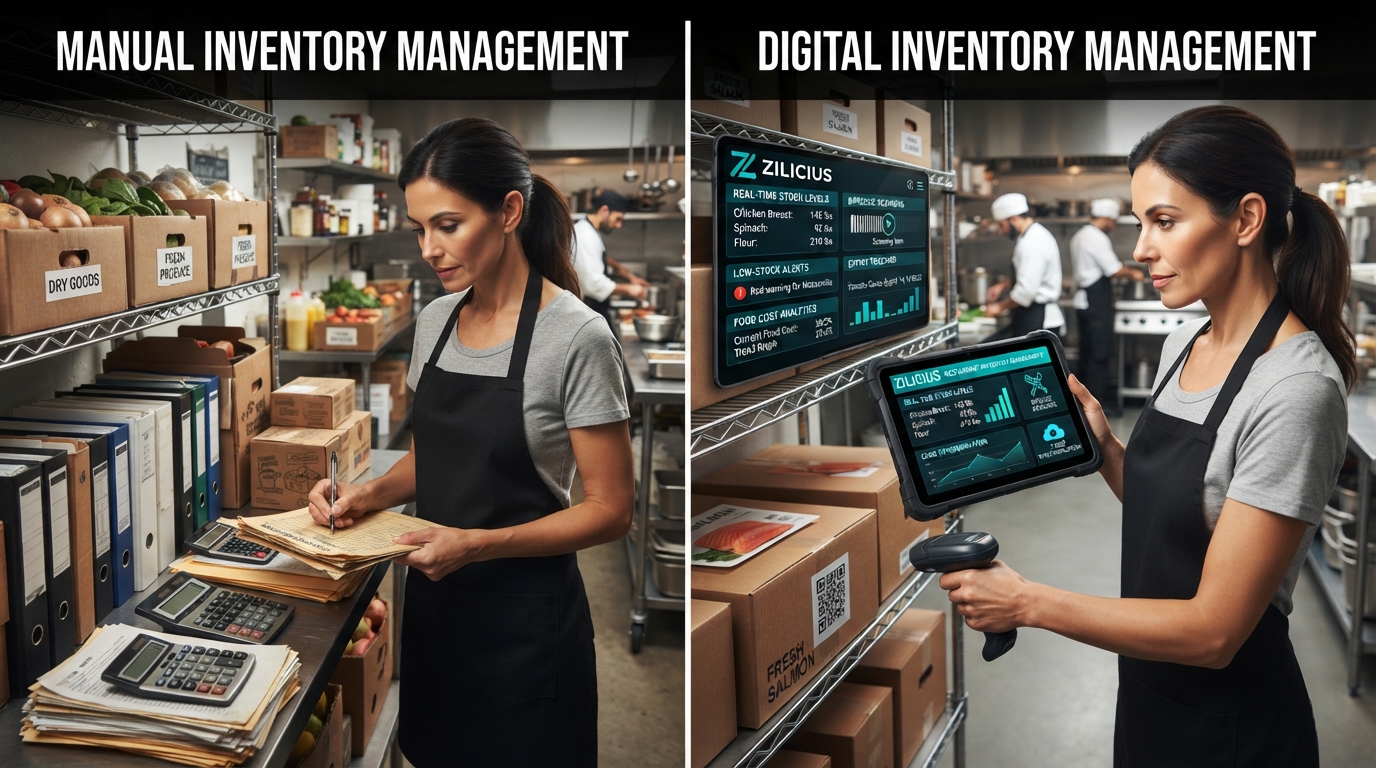
Manual Inventory vs Digital Inventory Management
Feature | Manual Inventory | Zilicius Inventory |
Stock Updates | Manual | Automatic |
Accuracy | Medium | High |
Wastage Tracking | Limited | Real-Time |
Reports | Manual | Instant |
Recipe Costing | Difficult | Automated |
Purchase Planning | Manual | Smart |
Low Stock Alerts | No | Yes |
9. Check Recipe Costing
Recipe costing helps restaurants understand the actual cost of every menu item.
A recipe cost sheet should include:
Ingredients required
Quantity used
Ingredient price
Total preparation cost
Example:
Pizza Cost Calculation:
Flour = ₹20
Cheese = ₹80
Vegetables = ₹30
Sauce = ₹20Total Cost = ₹150
Selling Price = ₹400
Profit Margin = ₹250
Accurate recipe costing helps restaurants improve pricing strategies.
10. Monitor Supplier Performance
Inventory audits should include supplier evaluation.
Check:
Delivery timing
Product quality
Pricing changes
Order accuracy
Payment terms
Reliable suppliers help maintain consistent operations.
11. Review Purchase Reports
Analyze:
Monthly purchases
Frequently purchased items
Price fluctuations
Supplier expenses
This helps restaurants negotiate better deals and optimize purchasing.
12. Maintain Inventory Documentation
Proper documentation improves accuracy.
Important records include:
Purchase invoices
Stock receiving reports
Waste reports
Transfer records
Inventory adjustment records
Supplier details
Digital records are more reliable than manual registers.
Common Restaurant Inventory Management Mistakes
1. Manual Inventory Tracking
Many restaurants still use spreadsheets or notebooks.
Problems include:
Human errors
Missing updates
Time-consuming calculations
No real-time visibility
2. Over Purchasing Stock
Buying excess inventory increases:
Storage costs
Expiry risk
Food wastage
Restaurants should purchase according to demand patterns.
3. Ignoring Inventory Reports
Data without analysis provides no value.
Restaurant owners should regularly review:
Stock movement
Food costs
Wastage reports
Purchase trends
4. No Integration Between POS and Inventory
When POS and inventory systems work separately, restaurants struggle with accurate tracking.
A connected system automatically updates inventory after every sale.
How Zilicius Helps Restaurants Automate Inventory Audits
Managing inventory manually can become difficult as restaurants grow.
Zilicius Restaurant Management System provides smart inventory management features designed for modern restaurants.
Real-Time Inventory Tracking
Track:
Available stock
Ingredient usage
Stock movement
Low-stock items
Automated Stock Updates
Every order processed through POS automatically updates inventory levels.
This reduces manual errors and improves accuracy.
Low Stock Alerts
Zilicius helps restaurants identify when ingredients need replenishment.
Benefits:
Prevent stock shortages
Avoid emergency purchasing
Maintain smooth operations
Food Cost Monitoring
Restaurants can analyze:
Ingredient costs
Consumption patterns
Profit margins
This helps improve financial control.
Supplier Management
Manage:
Supplier information
Purchase history
Order records
All data stays organized in one platform.
Reports & Analytics
Restaurant owners get valuable insights through:
Inventory reports
Sales reports
Purchase reports
Waste analysis
Data-driven decisions help restaurants increase profitability.
Why Restaurants Choose Zilicius Inventory Management
Restaurants choose Zilicius because it combines inventory management with:
POS Billing
Kitchen Display System
Recipe Management
Purchase Management
Supplier Management
QR Ordering
CRM
Reports & Analytics
Multi-Branch Management
This integrated approach reduces manual work and improves operational efficiency.
Restaurant Inventory Audit Frequency: How Often Should You Audit?
The ideal frequency depends on restaurant size.
Small Restaurants
Recommended:
Daily check for fresh items
Weekly inventory review
Medium Restaurants
Recommended:
Daily critical item monitoring
Weekly complete audit
Large Restaurants & Chains
Recommended:
Daily automated tracking
Weekly physical verification
Monthly financial analysis
Signs Your Restaurant Needs Better Inventory Management
Your restaurant should improve its inventory process if you experience:
Frequent stock shortages
Excess inventory
Food wastage
High food costs
Missing ingredients
Manual stock calculations
Difficulty tracking purchases
These are clear indicators that digital inventory management can improve operational efficiency.
Frequently Asked Questions (FAQs)
What is a restaurant inventory audit checklist?
A restaurant inventory audit checklist is a structured list of tasks used to check stock quantity, quality, usage, wastage, purchasing, and storage efficiency.
How often should restaurants perform inventory audits?
Restaurants should perform daily checks for perishable items, weekly stock audits, and monthly inventory analysis.
What should be included in a restaurant inventory audit?
A restaurant inventory audit should include stock counting, expiry checking, purchase verification, wastage tracking, storage inspection, and cost analysis.
How can restaurants reduce inventory wastage?
Restaurants can reduce wastage by using FIFO methods, tracking stock digitally, monitoring demand, and maintaining accurate inventory records.
Can restaurant software automate inventory audits?
Yes. Restaurant management software like Zilicius can automate inventory tracking, stock updates, reports, and purchase management.
Quick Summary
Reduce Food Waste
Improve Food Cost Control
Prevent Stock Shortages
Better Purchase Planning
Real-Time Inventory Tracking
Accurate Recipe Costing
Automated Stock Updates
Higher Restaurant Profitability
Final Thoughts
A proper restaurant inventory audit checklist helps businesses reduce costs, minimize wastage, improve efficiency, and increase profitability.
In today’s competitive food industry, restaurants cannot depend only on manual inventory methods. Digital inventory management solutions provide real-time visibility and better control over daily operations.
With Zilicius Restaurant Management System, restaurants can simplify inventory audits, automate stock management, and make smarter business decisions using accurate data.
Better inventory control means better profits, smoother operations, and happier customers.
By adopting cloud inventory management, restaurants can monitor stock anytime, improve purchasing accuracy, and maintain complete control over inventory across one or multiple locations.
Also Read
Kitchen Display System (KDS): Benefits for Modern Restaurants in Haryana