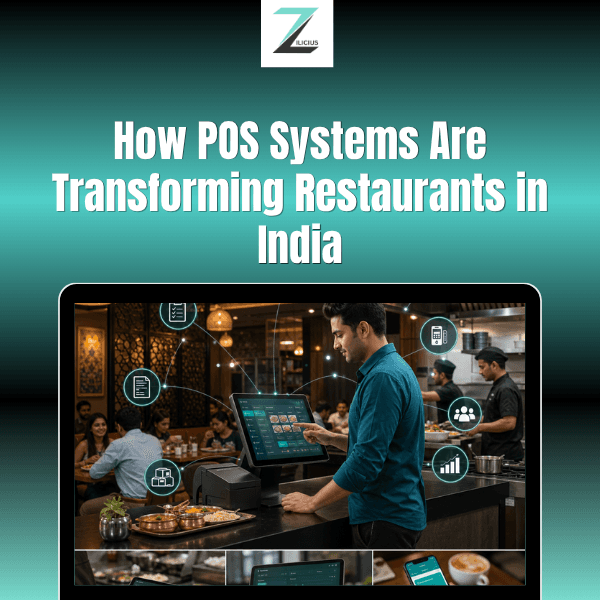

Walk into any bustling restaurant, cafe, or cloud kitchen in India today, and you'll notice something has changed. The chaotic scramble of handwritten KOTs, mismatched bills, and end-of-day manual tallying is quietly disappearing. In its place: a tablet at the billing counter, a kitchen display screen flashing new orders, and a dashboard that tells the owner exactly how much biryani sold last Tuesday. This shift is not a coincidence — it's the result of a quiet but powerful revolution driven by restaurant POS systems.
India's food service industry is one of the fastest-growing sectors in the country, and with that growth comes complexity. Multiple order channels (dine-in, takeaway, Swiggy, Zomato), GST compliance, staff management, inventory wastage, and customer retention — all of it needs to be managed in real time. A restaurant system isn't just a billing machine anymore. It has become the operational backbone of every serious food business, whether it's a 10-table cafe or a 5-outlet QSR chain.
In this article, we'll break down exactly how restaurant POS systems are reshaping restaurant operations across India, what separates the zilicius from the rest, and why choosing the right restaurant management platform — like Zilicius — can be the difference between a restaurant that scales and one that stagnates.
What Is a Restaurant POS System, Really?
A restaurant POS (Point of Sale) system is far more than a cash register replacement. Modern restaurant management software combines billing, order management, inventory tracking, staff scheduling, customer relationship management, and analytics into a single platform. Think of it as the central nervous system of your restaurant — every order, every rupee, and every ingredient flows through it.
Traditional POS machines were standalone hardware devices tied to a single location, often expensive to maintain and impossible to access remotely. Today's cloud based point of sale solutions have flipped that model entirely. Restaurant owners can now check sales reports from their phone while sitting at home, push menu price changes instantly across outlets, and get real-time inventory alerts — all without touching a physical machine.
This evolution matters especially in India, where restaurant margins are thin, competition is intense, and customers expect fast, accurate service every single time.
Why Indian Restaurants Are Rapidly Adopting POS Technology
1. The Multi-Channel Order Explosion
Ten years ago, a restaurant only had to manage dine-in orders. Today, a single outlet might be juggling walk-ins, phone orders, Swiggy, Zomato, and its own website — sometimes all at once during peak hours. Without a proper restaurant order management system, this quickly turns into chaos: missed orders, wrong items sent out, and frustrated customers.
A good pos software for restaurant operations consolidates every channel into one screen. Orders from delivery apps sync automatically with in-house billing, kitchen tickets print (or display) instantly, and nothing falls through the cracks.
2. GST Compliance and Billing Accuracy
GST-compliant restaurant billing software isn't optional in India anymore — it's a legal necessity. Manual billing increases the risk of calculation errors, tax mismatches, and compliance headaches during audits. The modern billing system auto-calculates taxes, generates GST-ready invoices, and keeps a clean digital trail for accounting.
3. The Rising Cost of Food Wastage
Food cost is one of the biggest line items in any restaurant's P&L, and inventory mismanagement quietly eats into margins every single day. This is where restaurant inventory management software becomes critical.
4. Cloud Kitchens Need Cloud-First Software
The rise of delivery-only brands has created massive demand for cloud kitchen software that can manage multiple virtual brands from a single kitchen, track order volume by platform, and optimize prep timing — something a legacy POS machine was never built to handle.
5. Customers Expect Personalization
Loyalty and repeat business increasingly depend on knowing your customer — their favorite dish, their last visit, their birthday. A built-in restaurant crm module lets restaurants send targeted offers, track repeat visit frequency, and build genuine customer relationships instead of one-off transactions.
Core Features Every Restaurant Should Look For
Not all software labeled "POS" delivers the same value. When evaluating the pos system for restaurant operations, here's what actually moves the needle:
Order & Billing Management
The heart of any point of sale software for restaurants is fast, accurate billing. Look for split billing, multiple payment modes (UPI, cards, wallets, cash), and instant KOT generation.
Inventory Software for Restaurants
Real-time stock tracking, automatic recipe-based deduction, low-stock alerts, and wastage reports. A strong restaurant inventory management system should tell you not just what you have, but what you're losing and why.
Table & Order Flow Management
For dine-in heavy formats, table status tracking, order merging, and waitlist management directly impact table turnover and revenue per seat.
Kitchen Display System (KDS)
Digital kitchen screens replace paper KOTs, reducing order errors and speeding up ticket times — especially valuable for high-volume kitchens.
Multi-Outlet & Centralized Reporting
As restaurants expand, a centralized restaurant management platform that consolidates sales, inventory, and staff data across all outlets from one dashboard becomes essential.
CRM & Loyalty
Built-in restaurant crm tools for customer database building, repeat-visit tracking, and automated offers.
Staff & Role Management
Role-based access, shift logs, and performance tracking to reduce internal pilferage and improve accountability.
Third-Party Delivery Integration
Direct Swiggy and Zomato integration so delivery orders flow straight into the same order management screen as dine-in and takeaway.
Restaurant POS vs Traditional Billing: A Quick Comparison
Feature | Traditional Billing | Modern Restaurant POS Software |
Order accuracy | Manual, error-prone | Digital, auto-synced across channels |
GST compliance | Manual calculation | Auto-generated, audit-ready |
Inventory tracking | Register-based, delayed | Real-time, recipe-linked |
Multi-outlet visibility | Not possible | Centralized dashboard |
Delivery app integration | Manual re-entry | Automatic sync |
Customer data | Not captured | CRM-enabled |
Access | On-premise only | Cloud-based, remote access |
Reporting | End-of-day manual tally | Real-time analytics |
This is precisely why cloud based restaurant pos systems are increasingly seen as a growth requirement rather than a convenience.
Best POS for Bars and Cafes: A Different Need
It's worth noting that not every food business runs like a full-service restaurant. A cafe point of sale system needs to prioritize speed — quick billing for high footfall, simple menu customization for frequent seasonal changes, and easy loyalty tracking for regulars who order the same cappuccino every morning.
Similarly, the pos for bars needs strong support for open tabs, split billing among groups, quick modifiers (extra shot, no ice, etc.), and tight inventory control over liquor stock — since beverage cost control is a completely different challenge from food cost control. When evaluating pos systems, prioritize solutions with strong stock reconciliation features, since liquor inventory shrinkage is a common and costly problem.
Whether it's pos cafe setups or full bar operations, the underlying requirement is the same: fast transactions, accurate stock tracking, and zero disruption during peak hours.
Point of Sale System Price: What Should You Expect?
One of the most common questions restaurant owners ask is about point of sale system price — and understandably so, since budgets in the food business are tight. Pricing generally varies based on:
Number of outlets and terminals needed
Cloud vs on-premise deployment
Included modules (inventory, CRM, KDS, multi-outlet reporting)
Hardware requirements (billing printer, pos machine for restaurant, kitchen display screens)
Subscription vs one-time licensing model
Most Indian restaurant software providers today offer subscription-based cloud pricing, which lowers the upfront investment significantly compared to older on-premise pos machines for restaurant setups that required expensive hardware and annual maintenance contracts. It's worth requesting a demo and comparing total cost of ownership — not just the sticker price — before committing.
How Zilicius Is Built for the Indian Restaurant Industry
At Zilicius, we've built our restaurant management system specifically around the day-to-day realities of Indian food businesses — not as a generic global template retrofitted for the Indian market.
Here's what makes Zilicius stand out as a genuine restaurant management app for growing businesses:
GST-Ready Billing: Fully compliant restaurant billing software with automatic tax calculation and audit-friendly invoicing.
Real-Time Inventory Management: Recipe-linked restaurant inventory management that tracks consumption automatically as orders are billed, flagging wastage and low stock before it becomes a problem.
Swiggy & Zomato Integration: Orders from delivery platforms flow directly into the same restaurant order management system used for dine-in, eliminating manual re-entry and order-mismatch errors.
Kitchen Display System: A digital KDS that replaces paper KOTs, cutting down ticket time and reducing kitchen-floor miscommunication.
Multi-Outlet Dashboard: For restaurant groups and chains, Zilicius centralizes sales, inventory, and staff data across every location in one restaurant management platform.
Built-In CRM: Capture customer data automatically at billing, track repeat visits, and run targeted loyalty campaigns without needing separate restaurant crm software.
Cloud Kitchen Ready: Purpose-built support for cloud kitchen software needs — multi-brand order routing, platform-wise sales breakdown, and prep-time optimization.
Bar & Cafe Friendly: Flexible modifiers, split billing, and tab management make Zilicius equally effective as a cafe billing software or pos food solution for bars.
Whether you're running a single neighborhood cafe or scaling a 10-outlet QSR brand, Zilicius is designed to grow with you — without forcing you to switch systems every time your business changes shape.
The Real Business Impact: Why This Matters Beyond Convenience
It's easy to view POS adoption as a technology upgrade. In reality, the businesses seeing the biggest impact treat it as an operational strategy shift.
Faster table turnover from streamlined billing directly increases revenue per seat during peak hours. Reduced food wastage from accurate inventory software for restaurants protects already-thin margins. Fewer order errors from integrated restaurant point of sale systems means fewer refunds, fewer complaints, and better online ratings — which, in India's review-driven ordering culture, directly affects footfall.
Perhaps most importantly, the data collected by a robust restaurant management software platform turns guesswork into decision-making. Which dishes sell best on weekends? Which outlet has the highest wastage? Which customers haven't visited in 60 days? These aren't vanity metrics — they're the difference between a restaurant that reacts to problems and one that prevents them.
Choosing the Restaurant POS System: A Practical Checklist
Before you commit to any restaurant management software, run through this checklist:
Does it offer GST-compliant billing out of the box?
Is inventory tracking recipe-linked and real-time, or just a manual stock register?
Does it integrate natively with Swiggy and Zomato?
Can you access reports remotely via cloud, or only on-premise?
Does it support multi-outlet management if you plan to expand?
Is there a built-in CRM, or will you need separate customer management software?
Does the pricing model fit your outlet size and growth plans?
Is customer support responsive, and is onboarding assistance included?
Any software claiming to be the restaurant point of sale system should comfortably check most, if not all, of these boxes.
The Future: Where Restaurant Technology in India Is Headed
The next phase of restaurant technology in India is moving toward deeper automation — AI-driven demand forecasting for inventory, predictive staffing based on footfall patterns, and even more seamless integration between cloud based restaurant pos systems and third-party platforms. Restaurants that adopt strong restaurant software foundations today are far better positioned to plug into these advancements as they arrive, rather than undergoing a painful system overhaul later.
As India's restaurant industry continues its rapid formalization — driven by GST compliance, delivery platform dominance, and rising customer expectations — the gap between businesses running on modern restaurant pos systems and those still relying on manual processes will only widen.
Final Thoughts
The transformation happening across Indian restaurants isn't just about faster billing or digital menus — it's a fundamental shift in how food businesses are managed, measured, and scaled. From GST-ready restaurant billing system software to real-time restaurant inventory management, from cloud kitchen software to integrated restaurant crm tools, the right restaurant management system touches every part of the business.
If you're still relying on manual registers or a disconnected billing machine, now is the time to explore what a modern restaurant management platform like Zilicius can do for your business — from your first outlet to your fifteenth.
Ready to see it in action? Book a free Zilicius demo today and discover why restaurants across India are switching to smarter, faster, and more reliable POS technology.
Frequently Asked Questions
Q1. What is the best POS system for restaurants in India?
The best restaurant POS system depends on your outlet size and needs, but generally, look for GST-compliant billing, real-time inventory management, Swiggy/Zomato integration, and cloud-based access. Zilicius offers all of these in one integrated restaurant management platform built specifically for Indian food businesses.
Q2. How much does a restaurant POS system cost in India?
Point of sale system price in India varies based on the number of outlets, deployment type (cloud vs on-premise), and included modules like inventory or CRM. Most modern providers offer subscription-based cloud pricing, which is significantly more affordable upfront than traditional POS hardware setups.
Q3. Can a restaurant POS system handle multiple outlets?
Yes, modern restaurant management software like Zilicius includes centralized multi-outlet dashboards, allowing owners to track sales, inventory, and staff performance across all locations from a single screen.
Q4. Is restaurant POS software useful for cloud kitchens?
Absolutely. Cloud kitchen software needs are different from dine-in restaurants — multi-brand order routing, platform-wise order tracking, and prep-time management are essential, all of which a good restaurant order management system should support.
Q5. What's the difference between restaurant POS and restaurant management software?
A restaurant POS traditionally refers to the billing and order-taking component, while restaurant management software is broader — encompassing inventory, CRM, staff management, and analytics alongside POS functionality. Today, most modern platforms combine both into a single system.
Q6. Does a restaurant POS system help reduce food wastage?
Yes. With recipe-linked restaurant inventory management, POS software automatically deducts stock as orders are billed, flagging discrepancies and low stock in real time — helping restaurants catch wastage before it eats into margins.
Q7. Is cloud-based POS better than traditional on-premise POS for restaurants?
For most Indian restaurants today, cloud based point of sale systems offer clear advantages — remote access, lower upfront hardware costs, automatic updates, and easier multi-outlet management compared to traditional on-premise systems.
Also Read
Restaurant POS Software in Haryana: Complete Guide (2026)