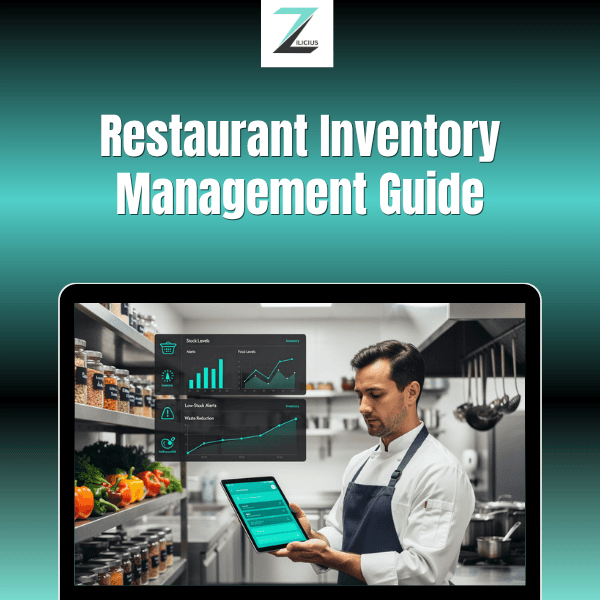

How Restaurants Can Improve Stock Control, Reduce Food Waste, and Increase Profitability
Running a successful restaurant is not only about serving delicious food and providing excellent customer service. Behind every profitable restaurant is a strong inventory management system that ensures the right ingredients are available at the right time without unnecessary wastage.
A restaurant can lose thousands of rupees every month because of expired ingredients, inaccurate stock records, and poor purchase planning. While customers only see the final dish, profitability depends heavily on how efficiently restaurants manage inventory behind the scenes.
Many restaurant owners in India struggle with problems like:
● Missing stock records
● Food wastage
● Expired ingredients
● Incorrect purchase planning
● Theft or stock leakage
● Rising food costs
● Difficulty tracking supplier performance
A proper restaurant inventory audit checklist helps identify these issues and creates a systematic approach to managing restaurant stock.
Whether you operate a small café, cloud kitchen, bakery, food court outlet, or a multi-location restaurant chain, regular inventory audits are essential for maintaining profitability.
With modern solutions like Zilicius Restaurant Management Software, restaurants can automate inventory tracking, monitor stock movement, reduce wastage, and make smarter business decisions.
What Is a Restaurant Inventory Audit?
A restaurant inventory audit is a systematic process of checking, counting, and analyzing all food items, ingredients, beverages, packaging materials, and supplies available in a restaurant.
The purpose of an inventory audit is to compare:
Actual Physical Stock vs Recorded Inventory Data
A restaurant inventory audit helps owners understand:
● What stock is available?
● What items are being consumed?
● Where wastage is happening?
● Which ingredients need reordering?
● Whether food costs are under control?
Regular audits allow restaurant owners to maintain accurate inventory records and improve operational efficiency.
Restaurant Inventory Audit Process: Step-by-Step
A systematic restaurant inventory audit process helps businesses maintain accurate stock records, reduce wastage, control food costs, and identify problems before they affect profitability. Regular inventory audits allow restaurant owners and managers to understand stock usage, detect discrepancies, and improve overall inventory management.
Whether it is a small café, restaurant chain, bakery, or food outlet, following a structured audit process ensures better control over ingredients, beverages, and supplies.
Step 1: Prepare Inventory List
The first step is creating a complete inventory list of all items used in restaurant operations.
This includes:
Food ingredients
Beverages
Packaging materials
Cleaning supplies
Kitchen essentials
Other operational items
A detailed inventory list helps ensure that every item is counted and monitored properly.
Step 2: Freeze Stock Movement
Before starting the inventory count, temporarily stop stock movement.
This means avoiding:
Receiving new stock
Issuing ingredients from storage
Transferring items between locations
Freezing stock movement ensures that the actual inventory count matches the recorded data and prevents calculation errors.
Step 3: Perform Physical Counting
The next step is manually counting the actual quantity of items available in storage areas.
Count inventory from:
Kitchen storage
Refrigerators
Freezers
Dry storage areas
Beverage sections
Accurate physical counting helps restaurants understand their real stock position.
Step 4: Compare Physical Stock With Records
After counting, compare the actual stock with existing inventory records or restaurant management software.
This helps identify:
Missing items
Incorrect entries
Stock usage differences
Recording mistakes
Using restaurant inventory management software makes this comparison faster and more accurate.
Step 5: Identify Inventory Differences
If differences are found between actual stock and recorded stock, analyze the reasons behind them.
Common causes include:
Food wastage
Incorrect portion control
Theft or loss
Expired products
Wrong purchase entries
Over-ordering
Understanding these issues helps restaurants improve their stock control process.
Step 6: Take Corrective Actions
The final step is implementing improvements based on audit findings.
Restaurants can improve by:
Optimizing purchasing decisions
Reducing food wastage
Improving storage practices
Setting stock level alerts
Training staff on inventory handling
A regular inventory audit combined with a smart Restaurant Inventory Management System helps businesses maintain accuracy, reduce costs, and improve profitability.
Why Restaurant Inventory Audits Are Important
1. Reduces Food Waste
Food wastage directly impacts restaurant profitability.
Without proper inventory monitoring, restaurants often experience:
● Over-purchasing
● Expired ingredients
● Poor storage practices
● Incorrect portion control
A regular inventory audit helps identify unnecessary waste and optimize purchasing decisions.
2. Controls Food Cost
Food cost is one of the biggest expenses for restaurants.
An inventory audit helps track:
● Ingredient usage
● Purchase prices
● Menu item costs
● Stock consumption patterns
By understanding actual food costs, restaurant owners can adjust pricing strategies and improve profit margins. Modern food cost control software helps restaurants analyze ingredient costs, menu profitability, and overall food expenses more accurately..
3. Prevents Stock Theft and Leakage
Inventory loss can happen due to:
● Incorrect entries
● Employee mistakes
● Unauthorized usage
● Supplier discrepancies
A digital inventory management system provides transparency by maintaining complete records of stock movement.
4. Improves Purchase Planning
Restaurants often face two situations:
● Too much stock that gets wasted
● Too little stock causing menu shortages
Inventory audits provide accurate data that helps restaurants purchase the right quantity at the right time.
Restaurant Inventory Audit Checklist
Below is a complete restaurant inventory audit checklist that restaurant owners in India can follow.
A proper restaurant inventory checklist should cover food ingredients, beverages, packaging supplies, storage conditions, supplier records, wastage tracking, and stock movement analysis.
1. Check All Inventory Categories
The first step is categorizing all restaurant inventory.
Your checklist should include:
Food Ingredients
✔ Vegetables
✔ Fruits
✔ Meat and seafood
✔ Dairy products
✔ Spices
✔ Grains
✔ Sauces
✔ Frozen items
Beverages
✔ Soft drinks
✔ Juices
✔ Coffee supplies
✔ Tea ingredients
✔ Alcoholic beverages (where applicable)
Packaging Materials
✔ Takeaway boxes
✔ Disposable containers
✔ Paper bags
✔ Cups
✔ Straws
✔ Napkins
Cleaning Supplies
✔ Sanitizers
✔ Cleaning chemicals
✔ Gloves
✔ Garbage bags
Proper categorization makes inventory tracking easier.
2. Perform Physical Stock Counting
Physical counting is the most important part of an inventory audit.
Restaurant staff should verify:
● Current quantity
● Item condition
● Expiry dates
● Storage location
Inventory counting should ideally be performed during non-operational hours to avoid mistakes. Restaurants should also assign responsibility to specific team members to maintain accountability.
✔ Use weighing scales for bulk ingredients
✔ Count high-value items separately
✔ Check storage areas completely
✔ Record damaged or expired products separately
Example:
Item | Recorded Quantity | Actual Quantity | Difference |
Rice | 50 kg | 45 kg | -5 kg |
Cheese | 20 packs | 18 packs | -2 packs |
Any difference should be investigated.
3. Check Expiry Dates and Product Quality
Expired inventory creates:
● Food safety risks
● Financial losses
● Customer complaints
During audits, check:
✔ Expiry dates
✔ Packaging condition
✔ Storage temperature
✔ Product freshness
Follow the FIFO method (First In, First Out) to ensure older stock is used first.
4. Analyze Stock Consumption
Understanding stock consumption helps identify business patterns.
Track:
● Daily ingredient usage
● Weekly consumption
● Monthly trends
● Seasonal demand
For example:
A restaurant in Haryana may experience higher demand for certain food items during festivals, weekends, or seasonal events.
Using inventory analytics helps restaurants forecast demand accurately.
For example, a North Indian restaurant may see higher consumption of paneer, dairy products, spices, and flour during festive seasons. Cafés may need better control over coffee beans, milk, bakery ingredients, and takeaway packaging. Understanding local demand patterns helps restaurants maintain optimum stock levels.
5. Verify Purchase Records
Compare inventory with purchase invoices.
Check:
✔ Supplier name
✔ Purchase quantity
✔ Purchase price
✔ Delivery date
✔ Invoice details
This helps identify:
● Incorrect billing
● Supplier issues
● Price changes
6. Monitor Food Wastage
Every restaurant should maintain a wastage record.
Track:
● Spoiled ingredients
● Overproduction
● Customer returns
● Kitchen mistakes
● Preparation waste
A wastage report helps restaurants identify areas where improvement is required.
7. Review Supplier Performance
Suppliers directly affect inventory quality.
Evaluate suppliers based on:
● Delivery timing
● Product quality
● Pricing
● Reliability
● Payment terms
Maintaining strong supplier relationships helps restaurants maintain consistent operations.
8. Check Storage Management
Proper storage reduces losses.
Audit:
Refrigeration
✔ Temperature control
✔ Proper arrangement
✔ Expiry monitoring
Dry Storage
✔ Clean shelves
✔ Proper labeling
✔ Pest control
Freezer Storage
✔ Frozen product condition
✔ Storage dates
Good storage practices improve food safety and reduce wastage.
9. Compare Inventory With Sales Data
Inventory should always be connected with sales.
For example:
If your POS system shows that you sold:
100 burgers
Your inventory should reflect:
● Bread consumption
● Patty usage
● Cheese usage
● Sauce usage
This helps identify unusual differences.
Modern restaurant management software like Zilicius connects POS billing with inventory management, allowing restaurants to monitor stock automatically.
10. Maintain Digital Inventory Records
Manual inventory tracking often creates errors.
Restaurants should use digital inventory management software to:
● Track stock automatically
● Monitor ingredient usage
● Receive low-stock alerts
● Generate reports
● Manage suppliers
● Reduce manual work
A cloud-based restaurant inventory management system provides real-time visibility into restaurant operations.
Manual Inventory vs Digital Inventory Management
Managing inventory efficiently is one of the biggest challenges for restaurants. While many restaurants still rely on traditional manual methods, digital inventory management systems are helping businesses improve accuracy, reduce wastage, and control operational costs.
Manual Inventory Management | Digital Inventory Management |
Paper-based records and spreadsheets | Real-time stock tracking through software |
Higher chances of human errors | Automated calculations with improved accuracy |
Difficult purchase planning | Smart inventory forecasting based on usage trends |
No instant stock alerts | Low-stock notifications and automated alerts |
Time-consuming reporting | Automated reports and analytics |
Limited visibility into stock movement | Complete tracking of inventory usage |
Manual updates required | Automatic updates after sales and purchases |
Difficult to manage multiple locations | Centralized inventory management |
Common Restaurant Inventory Management Mistakes
Many restaurants struggle because of these mistakes:
No Regular Audits
Checking inventory only occasionally leads to inaccurate records.
Manual Tracking Errors
Paper-based records can easily get misplaced or incorrectly updated.
Poor Stock Organization
Unorganized storage increases wastage.
Ignoring Food Cost Reports
Without analysis, restaurants cannot identify profit leakage.
Over-Purchasing
Buying excessive stock increases chances of spoilage.
How Restaurant Inventory Management Software Helps
A POS-integrated restaurant stock management system connects sales, purchases, and stock consumption data in one platform, helping restaurants maintain accurate inventory records.
A restaurant inventory management system helps with:
Real-Time Stock Tracking
Monitor inventory levels instantly with a restaurant stock management system and get complete visibility of available stock, ingredient usage, and stock movement.
Automatic Stock Updates
Every sale automatically updates ingredient usage. Kitchen inventory management software helps kitchen teams monitor raw materials, recipe consumption, and stock availability in real time.
Low Stock Alerts
Receive automatic low-stock notifications before items run out and avoid shortages with a smart restaurant inventory control system.
Supplier Management
Maintain supplier records, purchase history, pricing details, and vendor performance using integrated restaurant ERP software India solutions.
Food Cost Analysis
Understand ingredient costs and profitability using food cost control software that analyzes purchase prices, ingredient usage, and menu performance.
Multi-Outlet Inventory Control
Understand ingredient costs and profitability using food cost control software that analyzes purchase prices, ingredient usage, and menu performance.
Why Zilicius Is the Right Choice for Restaurant Inventory Management in India
As restaurants expand, managing inventory manually becomes difficult. Owners need a centralized system that connects billing, inventory, kitchen operations, and reporting.
Zilicius Restaurant Management System helps restaurants automate:
● POS Billing
● Inventory Management
● Kitchen Display System (KDS)
● Order Management
● Reports & Analytics
● Supplier Management
● Multi-location operations
For growing businesses, restaurant ERP software in India provides a centralized platform to manage billing, inventory, suppliers, reports, and multiple outlets from one system.
With Zilicius, restaurant owners can:
✔ Reduce food wastage
✔ Improve inventory accuracy
✔ Track stock movement
✔ Control operational costs
✔ Make data-driven decisions
Whether you run a café, restaurant, bakery, food court, or franchise business, Zilicius provides the technology needed to operate efficiently.
Restaurant Inventory Audit Frequency: How Often Should You Audit?
The ideal audit frequency depends on restaurant size.
Small Restaurants
Weekly inventory checks
Medium Restaurants
2–3 times per week
Large Restaurants and Chains
Daily monitoring with automated software
High-value items like meat, seafood, and dairy should be checked more frequently.
Frequently Asked Questions (FAQs)
What is included in a restaurant inventory audit checklist?
A restaurant inventory audit checklist includes stock counting, expiry checking, purchase verification, supplier review, wastage tracking, storage inspection, and inventory reconciliation.
How can restaurants reduce food wastage?
Restaurants can reduce food wastage through proper inventory tracking, demand forecasting, portion control, FIFO inventory methods, and digital inventory management software.
Which is the best restaurant inventory management software in India?
The best restaurant inventory software should provide real-time stock tracking, POS integration, supplier management, analytics, and automation features. Zilicius helps restaurants manage inventory and daily operations efficiently.
How does inventory software improve restaurant profitability?
Inventory software reduces wastage, prevents stock shortages, controls food costs, improves purchasing decisions, and provides accurate business insights.
Is restaurant inventory management software useful for small restaurants?
Yes. Small restaurants benefit from inventory software because it reduces manual work, improves accuracy, and helps control expenses.
Can inventory software calculate restaurant food cost?
Yes. Restaurant inventory software tracks ingredient usage, purchase prices, and menu consumption patterns to help calculate food costs accurately.
How can restaurants prevent stock leakage?
Restaurants can reduce stock leakage by monitoring inventory movement, employee usage, purchase records, and consumption reports through digital inventory systems.
Conclusion
A well-maintained inventory system is the foundation of a profitable restaurant. Regular audits help restaurant owners control costs, reduce wastage, improve food quality, and maintain smooth operations.
In today's competitive restaurant industry, manual inventory management is no longer enough. Businesses need smart technology solutions that provide real-time insights and automation.
With Zilicius Restaurant Management Software, restaurants across India can simplify inventory management, optimize operations, and build a more profitable business.
Contact Us Now