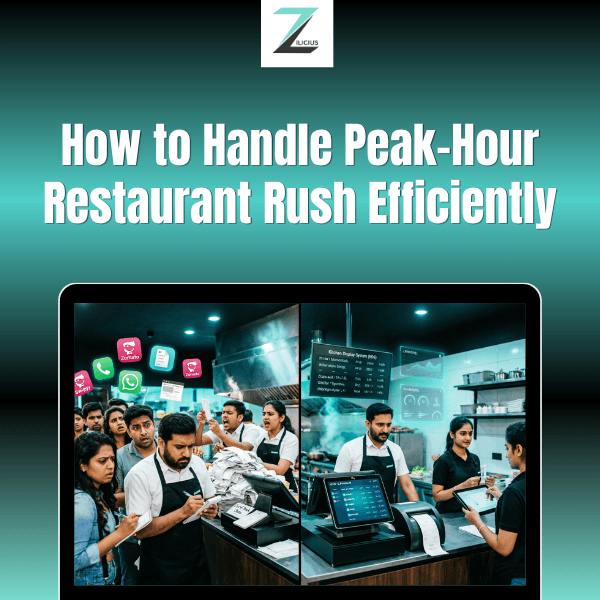

How to Handle Peak-Hour Restaurant Rush Efficiently
Every restaurant owner knows the feeling.
It's 8 PM on a Friday evening. The dining area is full, online orders are pouring in from multiple delivery platforms, customers are waiting to be seated, kitchen staff are racing against time, and the cashier is struggling to manage billing. One mistake during these busy hours can result in delayed orders, unhappy customers, negative reviews, and lost revenue.
Peak hours are the most profitable part of the day—but they're also the most challenging. Restaurant peak hours can determine whether your business earns maximum profit or loses valuable customers due to delays and operational inefficiencies. Whether you operate a café, cloud kitchen, QSR, fine-dining restaurant, bakery, or multi-outlet chain, efficiently managing peak-hour rush requires the right combination of trained staff, streamlined workflows, and modern Restaurant Management Software.
What Are Peak Hours in a Restaurant?
Peak hours are the periods during the day when restaurants experience their highest customer traffic and order volume. These busy periods typically occur during lunch, dinner, weekends, holidays, and festive seasons. For restaurants offering dine-in, takeaway, and online delivery, peak hours can become extremely demanding because multiple orders arrive simultaneously from different channels.
For example:
Lunch Rush (12 PM–3 PM)
Evening Rush (7 PM–10 PM)
Weekend Rush
Festival Rush
Swiggy & Zomato Rush
During these hours, restaurant owners must manage seating, order taking, kitchen operations, billing, deliveries, inventory, and customer service simultaneously. Without a streamlined process, even minor delays can lead to poor customer experiences and lost revenue.
The difference between a thriving restaurant and one that struggles often comes down to how efficiently it handles high customer volume.
In this guide, we'll explore practical strategies to manage restaurant rush hours and explain how Zilicius Restaurant Management Software helps restaurants streamline operations, reduce delays, and maximize profits.
Why Peak Hours Matter
For most restaurants, nearly 60–80% of daily revenue is generated during lunch and dinner rushes.
These hours determine:
Customer satisfaction
Average table turnover
Kitchen efficiency
Staff productivity
Revenue generation
Online ratings
If your operations slow down during busy periods, every minute of delay can cost customers and future business.
Why Restaurants Struggle During Peak Hours
Most restaurant owners believe that peak hours are the biggest challenge. In reality, the problem isn't the rush—it's the lack of systems to handle increased customer demand efficiently. Without the right technology, even a busy restaurant can experience delays, mistakes, and dissatisfied customers.
Lack of Staff Planning
Many restaurants schedule the same number of employees throughout the day, even though customer traffic changes significantly. During peak hours, this leads to staff shortages, slower service, and increased workload.
Slow Order Processing
Manual order taking takes valuable time and delays orders from reaching the kitchen. Even a small delay can increase customer waiting time and reduce table turnover.
Poor Communication
Restaurant operations often work in silos. Captains, kitchen staff, cashiers, and delivery teams communicate manually, leading to missed orders, duplicate requests, and service delays.
Manual Billing
Long billing queues during busy hours slow down customer checkout, increase waiting time, and affect the overall dining experience.
No Inventory Visibility
Without real-time inventory tracking, restaurants may unexpectedly run out of ingredients or menu items during rush hours, resulting in cancelled orders and unhappy customers.
Managing Multiple Delivery Apps
Restaurants receive orders from multiple channels, including Swiggy, Zomato, their website, phone calls, and WhatsApp. Managing all these platforms manually can lead to missed orders, delays, and operational confusion.
The Solution
A modern Restaurant Management Software solves these challenges through automation. It streamlines order management, improves communication between teams, enables faster billing, tracks inventory in real time, manages staff efficiently, and centralizes orders from multiple delivery channels—helping restaurants deliver faster service and a better customer experience, even during the busiest hours.
Common Challenges Restaurants Face During Peak Hours
1. Long Waiting Times
Customers become frustrated when they have to wait too long for seating, ordering, or food delivery.
This often leads to:
Order cancellations
Negative reviews
Lower repeat business
2. Kitchen Bottlenecks
The kitchen receives dozens of orders simultaneously.
Without proper prioritization:
Orders get mixed up
Duplicate dishes are prepared
Cooking delays increase
Food quality declines
3. Billing Delays
Manual billing creates queues at the counter.
Customers today expect:
Fast checkout
QR payments
Card payments
Split bills
Even a few extra minutes can affect customer experience.
4. Staff Miscommunication
Servers, chefs, cashiers, and managers need constant coordination.
Without digital communication:
Wrong orders are served
Duplicate KOTs occur
Orders are forgotten
5. Inventory Shortages
Restaurants often discover ingredient shortages only after customers place orders.
This results in:
Cancelled dishes
Customer disappointment
Revenue loss
6. Online Delivery Overload
Restaurants today receive orders from multiple delivery platforms simultaneously. Managing separate devices for Swiggy, Zomato, direct website orders, and phone calls often creates confusion, duplicate orders, and delayed preparation. A centralized order management system helps restaurants consolidate every order into a single dashboard, reducing operational complexity during busy hours.
7. Slow Table Turnover
During rush hours, every occupied table directly affects revenue. Delays in billing, table cleaning, and seating the next guests reduce the number of customers served. Efficient table management and faster checkout improve table turnover and maximize profitability.
8. Staff Fatigue
Restaurant staff work under immense pressure during peak periods. Without clear task allocation and digital support, employees are more likely to make mistakes, forget orders, or slow down service. Smart workforce management helps distribute responsibilities more effectively.
How to Prepare Your Restaurant Before Peak Hours Begin
Successful restaurants don't wait for customers to arrive before getting organized. A few hours of preparation can make the difference between a smooth service and a stressful rush. Here's a simple checklist to help your restaurant stay ready during peak hours.
1. Check Inventory
Review stock levels of essential ingredients, beverages, and packaging materials. Refill low-stock items and ensure everything needed for the day's service is available to avoid last-minute shortages.
2. Conduct a Staff Briefing
Gather your team for a quick meeting to discuss expected customer traffic, daily specials, reservations, and individual responsibilities. Clear communication helps everyone stay coordinated.
3. Prepare the Kitchen
Complete ingredient prep such as chopping vegetables, marinating meats, and preparing sauces. Ensure cooking stations, equipment, and utensils are clean and ready for service.
4. Test Your POS System
Verify that your POS software, receipt printers, payment terminals, and internet connection are working properly. A quick test transaction can help prevent billing delays during busy hours.
5. Verify QR Menus
If you use digital menus, make sure QR codes scan correctly, menu items are updated, and unavailable dishes are removed to provide customers with accurate information.
6. Clean the Restaurant
Inspect the dining area, kitchen, washrooms, and entrance to ensure they are clean and welcoming. A tidy restaurant creates a positive first impression for guests.
7. Organize Packaging Supplies
Keep takeaway boxes, bags, tissues, cutlery, and labels ready at the packing station. This helps staff process takeaway and delivery orders quickly.
8. Check Delivery Platforms
Confirm that your restaurant is online on food delivery apps, menus are updated, and order notifications are working properly to avoid missing online orders.
9. Review Reservations
Go through the reservation list, assign tables, and note any special requests. Proper planning helps reduce waiting times and improves the dining experience.
10. Plan Based on Sales Forecast
Review previous sales trends and expected demand for the day. This helps you prepare enough inventory, schedule staff efficiently, and handle customer traffic with confidence.
15 Proven Ways to Handle Peak-Hour Restaurant Rush
1. Use a Modern Restaurant POS System
A cloud-based POS system speeds up:
Billing
Order management
Payment processing
KOT generation
With Zilicius POS, orders reach the kitchen instantly without manual entry.
2. Implement a Kitchen Display System (KDS)
Printed kitchen tickets create confusion.
A Kitchen Display System:
Displays live orders
Prioritizes preparation
Eliminates paper tickets
Reduces cooking errors
Kitchen staff always know which orders should be prepared first.
3. Enable Captain Ordering
Instead of writing orders manually, waiters can use tablets or mobile devices.
Benefits include:
Faster ordering
Instant kitchen communication
Fewer mistakes
Better customer service
4. Optimize Staff Scheduling
Peak hours require more employees.
Analyze previous sales data to determine:
Busy days
Busy timings
Required staff
Shift planning
Smart workforce management prevents understaffing.
5. Accept Multiple Payment Methods
Customers expect flexible payment options.
Offer:
UPI
QR Code
Credit Cards
Debit Cards
Digital Wallets
Cash
Faster payments mean faster table turnover.
6. Automate Table Management
Know instantly:
Which tables are occupied
Which tables are reserved
Which tables need cleaning
Digital table management increases seating efficiency.
7. Monitor Online Orders in One Dashboard
Restaurants often receive orders from:
Swiggy
Zomato
Website
Mobile App
Walk-ins
Managing multiple tablets creates confusion.
Zilicius consolidates all orders into one dashboard.
8. Track Inventory in Real Time
Live inventory monitoring helps restaurants:
Prevent stockouts
Reduce food waste
Forecast demand
Monitor ingredient usage
Managers receive low-stock alerts before ingredients run out.
9. Simplify Menu During Rush Hours
A streamlined menu allows kitchens to:
Cook faster
Reduce preparation time
Improve consistency
Increase output
Many successful restaurants create special peak-hour menus.
10. Use Order Status Displays
Customers appreciate transparency.
Order Status Displays show:
Order Received
Preparing
Ready for Pickup
This reduces unnecessary inquiries at the counter.
11. Forecast Demand Using Analytics
Historical sales reports reveal:
Best-selling dishes
Peak timings
Seasonal trends
High-demand ingredients
Predictive analytics helps restaurants prepare in advance.
12. Improve Kitchen Workflow
Organize stations efficiently.
Separate:
Grill
Fry
Beverages
Desserts
Packaging
Parallel preparation significantly reduces cooking time.
13. Train Employees Regularly
Technology works best with trained staff.
Conduct regular sessions on:
POS usage
Customer service
Food handling
Payment processing
Emergency handling
Confident employees work faster under pressure.
14. Use Real-Time Performance Dashboards
Restaurant managers should monitor:
Live sales
Pending orders
Kitchen performance
Staff productivity
Table occupancy
Real-time insights enable quicker decisions.
15. Collect Customer Feedback
After busy periods, review:
Customer ratings
Delivery times
Complaints
Popular menu items
Continuous improvement helps restaurants perform better every day.
How Zilicius Restaurant Management Software Helps During Peak Hours
Zilicius is designed to simplify restaurant operations from order placement to final billing.
Fast POS Billing
Generate invoices within seconds while supporting multiple payment methods.
Kitchen Display System (KDS)
Automatically routes orders to the kitchen with real-time updates, helping chefs prioritize preparation and reduce delays.
Captain Ordering App
Servers can take orders digitally and send them directly to the kitchen, minimizing manual errors and improving service speed.
Inventory Management
Track ingredient consumption in real time, receive low-stock alerts, and avoid last-minute shortages during busy hours.
Queue & Order Status Display
Keep customers informed with live order progress, reducing counter congestion and improving the pickup experience.
Workforce Management
Plan employee shifts, monitor attendance, and assign resources based on expected customer traffic.
Reports & Analytics
Access detailed insights into sales trends, peak hours, top-selling items, and staff performance to make data-driven decisions.
Multi-Outlet Management
Manage menus, pricing, inventory, and operations across multiple restaurant locations from one centralized dashboard.
Benefits of Managing Peak Hours Efficiently
Restaurants that optimize rush-hour operations can achieve:
Faster order processing
Higher customer satisfaction
Increased table turnover
Better online ratings
Reduced operational errors
Lower food waste
Improved staff productivity
Greater profitability
Stronger customer loyalty
Sustainable business growth
Future Trends in Peak-Hour Restaurant Management
The restaurant industry is rapidly adopting technologies such as:
AI-powered demand forecasting
Smart kitchen automation
Self-ordering kiosks
QR code ordering
Voice-assisted ordering
Predictive inventory management
Automated staff scheduling
Contactless payments
Real-time business analytics
Cloud-based restaurant management platforms
Restaurants that embrace these innovations will be better equipped to handle increasing customer demand while maintaining service quality.
Frequently Asked Questions (FAQs)
What are peak hours in a restaurant?
Peak hours are the busiest times of the day—typically lunch and dinner—when customer orders, dine-in traffic, and delivery requests are at their highest.
How can restaurants reduce waiting times?
Restaurants can reduce waiting times by using digital POS systems, kitchen display systems (KDS), online table reservations, optimized staff scheduling, and real-time order management.
Why is a Kitchen Display System (KDS) important during busy hours?
A KDS replaces paper tickets with digital order displays, helping kitchen staff prioritize orders, reduce errors, and speed up food preparation.
How does inventory management help during peak hours?
Real-time inventory tracking prevents ingredient shortages, minimizes food waste, and ensures popular menu items remain available during high-demand periods.
Can restaurant management software improve customer satisfaction?
Yes. Restaurant management software streamlines billing, ordering, kitchen communication, and order tracking, leading to faster service, fewer mistakes, and a better overall dining experience.
Conclusion
Peak-hour rush doesn't have to result in chaos. With the right operational strategies and modern restaurant technology, busy periods can become your biggest opportunity for growth and profitability.
From faster billing and streamlined kitchen workflows to intelligent inventory management and real-time analytics, Zilicius Restaurant Management Software empowers restaurants to deliver exceptional service even during the busiest hours.
Whether you operate a café, fine-dining restaurant, cloud kitchen, bakery, food court, or multi-outlet chain, Zilicius provides the tools you need to stay organized, serve customers faster, and maximize every peak-hour opportunity.
Ready to transform your restaurant operations? Explore how Zilicius Restaurant Management Software can help you manage peak-hour rushes with confidence and efficiency.
Also Read