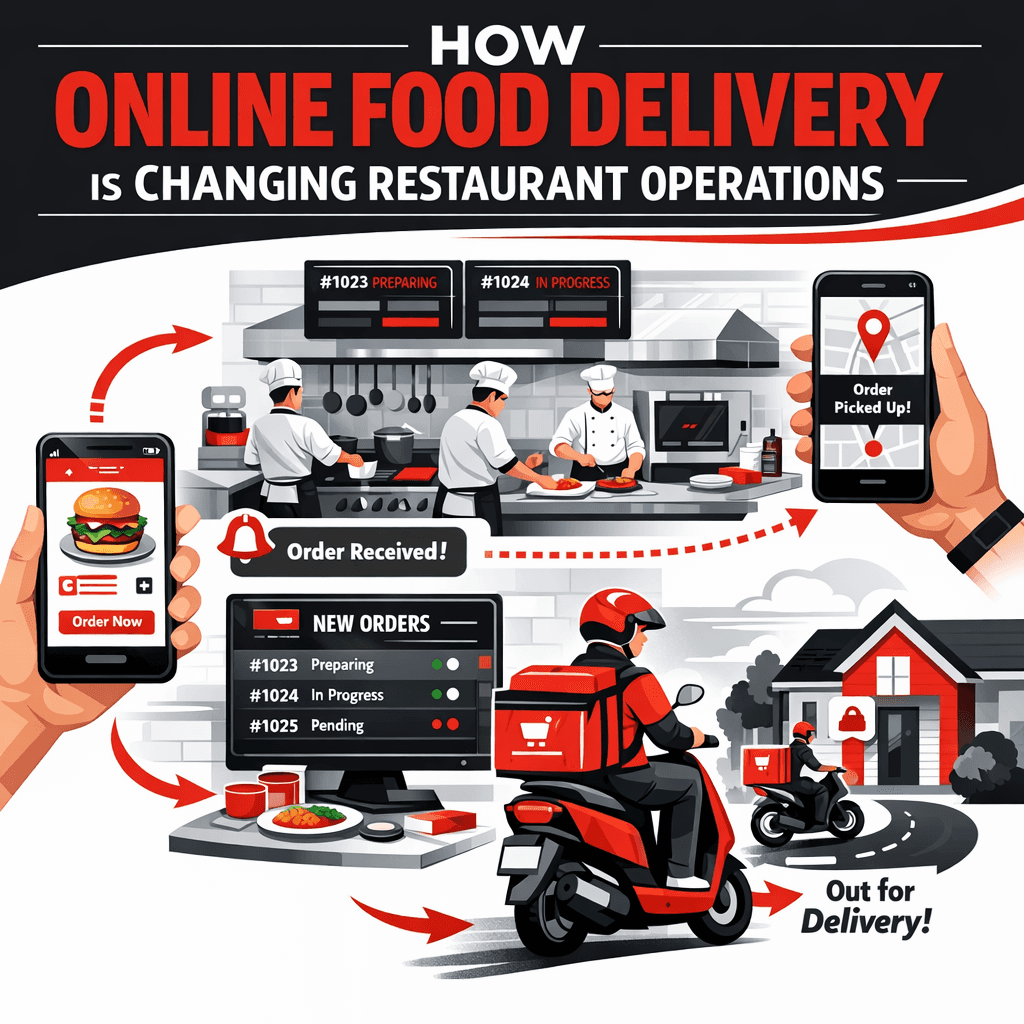

Online food delivery platforms like Zomato and Swiggy have transformed how restaurants manage daily operations, from order processing to customer engagement. While this shift boosts efficiency and expanded customer reach, it also introduces serious challenges like high commissions and staffing demands, increased operational complexity, and growing pressure on staff.
Rise of Delivery Platforms
Food delivery apps like Uber Eats, DoorDash, and Zomato have seen explosive growth post-pandemic, with India's market growing 150% in recent years according to NRAI data. These platforms connect restaurants to vast customer bases, enabling 24/7 orders beyond traditional dine-in hours.
Restaurants now handle digital orders alongside walk-ins customers, requiring integrated POS systems for real-time tracking and smooth operations . This expands reach but shifts revenue—Stanford research shows 30-50% of delivery sales are new, while the rest cannibalizes in-house dining.
Operational Efficiency Gains
Digital ordering cuts manual errors, streamlining kitchens with accurate, customizable orders via apps. Cloud-based tools let owners monitor multiple outlets, update menus instantly, and analyze sales trends remotely.
Average order values rise 20% online due to upsells like combos and add-ons shown visually. At the same time, data from orders helps optimize menus—popular items get promoted, reducing waste and aiding inventory decisions.
Kitchen and Staffing Shifts
Online Delivery demands dedicated prep spaces for packaging, along with some restaurants redesigning layouts for pickup zones and driver parking.The rise of ghost kitchens—built exclusively for online orders—helps reduce dine-in overhead and maximize efficiency.
Staffing adapts too: more cooks for volume spikes, but drivers often come from platforms, easing logistics.However, peak-hour demand can strain operations, pushing restaurants to adopt AI-based order prediction and IoT-enabled tools for faster fulfillment.
Revenue Impacts
Delivery opens new revenue streams, especially during slow hours and holidays, bypassing foot traffic limits. Direct online systems avoid 30% third-party commissions, retaining customer data for loyalty programs.
Yet profitability suffers—apps take hefty cuts, forcing price hikes or margin squeezes. Chains like Domino's succeed with strong in-house delivery models, while independents exit platforms like Proposition Chicken did.
Aspect | Third-Party Apps | Direct Ordering |
Commissions | 20-30% per order | None |
Customer Data | Platform-owned | Restaurant-owned |
Order Value | Higher via upsells | Customizable promos |
Control | Limited | Full menu/ops |
Technology Integration
POS integrations sync orders across channels, with real-time dashboards tracking performance. AI -driven tools personalize suggestions, boosting repeat orders; IoT speeds prep with smart appliances.
Branded apps like Chipotle's simplify menus for quick mobile orders, lifting satisfaction 30% via appealing UX. Analytics reveal preferences, enabling targeted promos over broad advertising.
Challenges for Restaurants
High commission fees erode profits, while intense competition on delivery platforms often favors high-volume partners. Operational headaches include accurate ETAs and packaging standards, leading closures for some restaurants.
Customer data lock-in limits direct marketing, shifting focus to delivery over dine-in. Smaller spots struggle most, unlike pizza chains already delivery-heavy.
Adaptation Strategies
To stay profitable, restaurants invest in direct ordering via websites or apps like Lunchbox to dodge fees and own data. Hybrid models balance dine-in with delivery, using cloud kitchens for overflow is becoming the most effective approach. .
At the operational level, Staff training for digital workflows and menu tweaks for delivery (e.g., sturdy packaging) help. Partnerships with lower-fee platforms or in-house fleets build sustainability.and control.
Customer Experience Focus
Food delivery Apps prioritize convenience—offering fast ordering, real-time tracking, and wide variety —driving customer loyalty. Restaurants respond with visuals, accurate delivery times, and easy payments experiences to stay competitive.
This continuous feedback loop refines operations: feedback data shapes menus, while seamless service retains users over competitors.
Future Trends
By 2026, expect more AI-driven ops, drone deliveries, and subscription models like DashPass. Ghost kitchens proliferate, with restaurants going fully virtual.
Sustainability pushes eco-friendly packaging; regulations may cap commissions. Direct ordering channels dominate as owners reclaim control.
Marketing Evolution
SEO for "near me" searches and app store optimization draw traffic. Social proof via reviews influences 80% of orders, so platforms amplify visibility.
Direct email/SMS from owned data outperforms app reliance, fostering repeats.
Data-Driven Decisions
Modern restaurants rely on Order data revealing trends—spicy surges or vegan rises—guiding stock and promos. Performance reports track peak hours, optimizing staffing.
Performance analytics also identify peak hours, enabling better staff planning and faster service. This analytics edge helps pivot fast, like adding delivery-only items.
Profitability Tips
Prioritize direct ordering to save 30% fees.
Use data for dynamic pricing during peaks.
Train for dual dine-in/delivery flows.
Partner selectively with low-commission apps.
Conclusion
Online delivery reshapes restaurant operations for efficiency and reach, but success demands balancing costs with tech savvy. Owners adapting via direct channels and data thrive in this app-driven era.
Also Read
Tech Trends Every Restaurant Owner Should Watch in 2026